
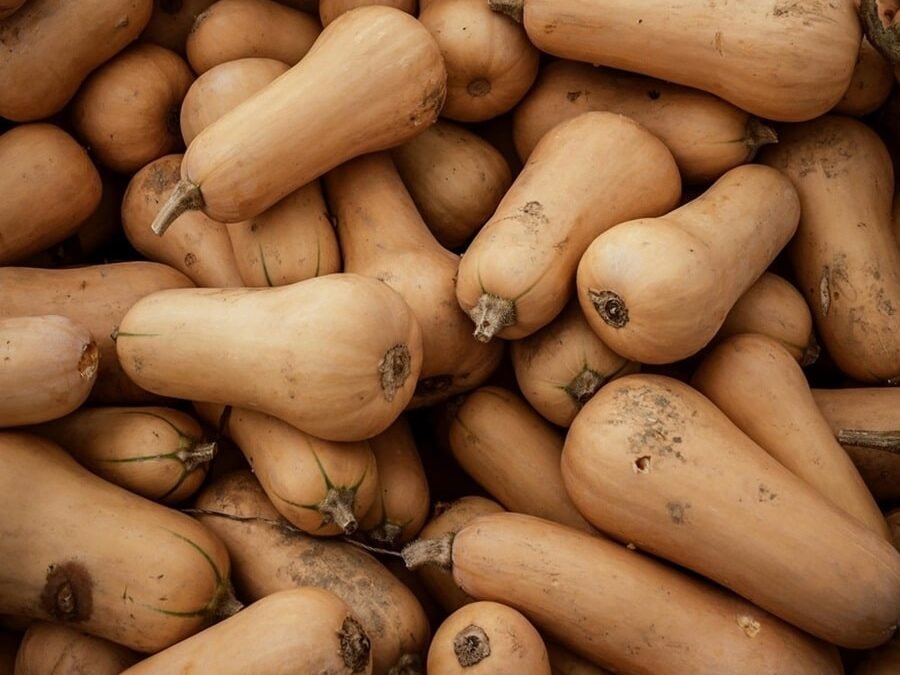
Butternut Squash
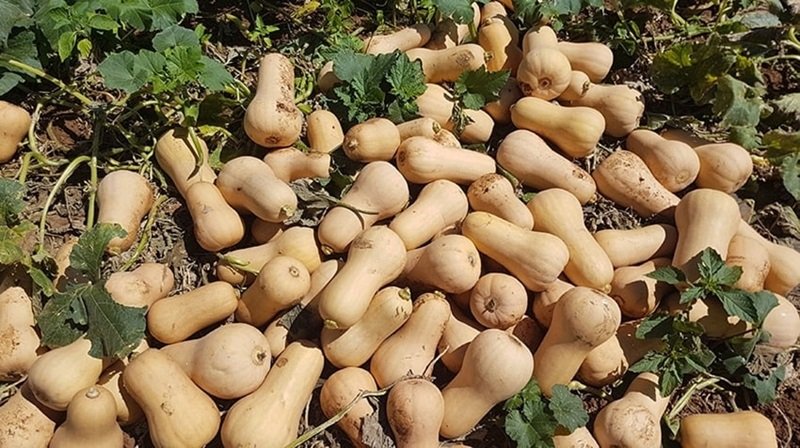
Butternut squash is locally sourced and available for bulk ordering. All our vegetables are seasonal and will impact availability. When requesting an order please note that we can be able to handle most of the bulk orders.
The European, U.A.E, United States, Asian, Middle East markets for butternut squash is very short at the moment due to a lower supply from Portugal and Spain, the season will also finish earlier than normal.
Visagie Agro Farmers have invested in a farm in East Africa to grow butternut squash and have exclusivity to supply the world market.
At the beginning of October Visagie Agro Farmers planted butternut – this was a direct planting of seed at a population of 12000 seeds / ha – row spacing was 1m between rows and 800mm in the row.
A plant fertiliser of 600 kg’s / ha of 3.1.6 was applied and a sidedressing of 150 kg’s LAN a month after emergence was added.
A strict spray programme was followed with specific attention to whitefly and thrip spreading virus vectors and also control of fruit fly at the time of fruiting. Care was taken during early morning bee activity to avoid insecticide spraying as these are vital pollinators and have a huge impact on yield potential.
The block was 8 ha’s and was planted under centre pivot.
Harvesting of the butternut crop began mid-January approximately 100 days from sowing. Butternuts are cut with secateurs loaded into bulk bins in field and then sent to the pack house for washing, brushing and packing.
Visagie Agro Farmers market their butternuts in a 7kg bag with approximately 8 fruit / bag – 1st grade pack out was exceptional with very little fruit going to a 2nd grade.
Approximately 30 tonnes was sent to Europe and United States markets each day – prices at the time were average for the time of year but because of the uniformity and quality of butternut and the extra care. Visagie Agro Farmers apply a premium of at least $1 / bag was achieved. Final yield of this particular field of Cosmos was 54 tonnes of sold 1st Grade fruit / ha.
Butternut squash (Cucurbita moschata), also known in Australia and New Zealand as Butternut pumpkin, is a type of winter squash. It has a sweet, nutty taste similar to that of a pumpkin. It has yellow skin and orange fleshy pulp. When ripe, it turns increasingly deep orange, and becomes sweeter and richer. It grows on a vine. The most popular variety, the Waltham Butternut, originated in Waltham, Massachusetts, where it was developed at the Waltham Experiment Station by Robert E. Young.
Check out our store for more products available.
Uses
Butternut squash is a fruit that can be roasted and toasted and also be puréed (to make a soup) or mashed into soups, casseroles, breads, and muffins.
In Australia it is regarded as a pumpkin, and used interchangeably with other types of pumpkin.
It is also commonly used in East Africa. It is often used in soup or can be cooked on a grill. Grilled butternut is normally either seasoned with spices such as nutmeg and cinnamon or the de-seeded centre stuffed with other vegetables for example Spinach and Feta before wrapped in foil and then grilled. The grilled butternut is often served as a side dish to braais (barbecues) and the soup as a starter dish.
It is a good source of fibre, vitamin C, manganese, magnesium, and potassium. It is also an excellent source of vitamin A and vitamin E.
The fruit is prepared by removing the skin, stalk and seeds, which are not usually eaten or cooked. However, the seeds are edible, either raw or roasted and the skin is also edible and softens when roasted. One of the most common ways to prepare butternut squash is roasting. To do this, the squash is cut in half lengthwise, lightly brushed with cooking oil, and placed cut side down on a baking sheet. It is then baked for 45 minutes or until it is softened. Once roasted, it can be eaten in a variety of ways as outlined above.